 reviews features podcasts email bio
|
The Story so far... Label & Artist Submissions Accepted for Review...
|
Luis Paniagua Interview
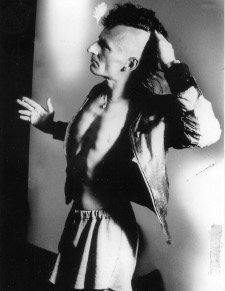
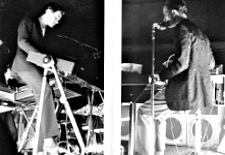
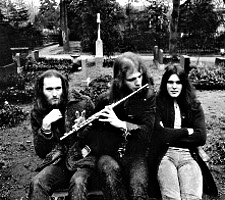
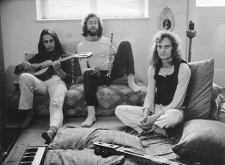
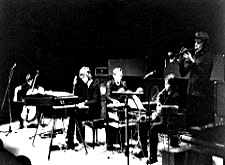
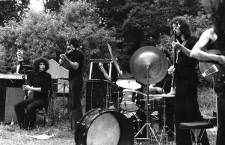
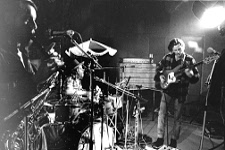
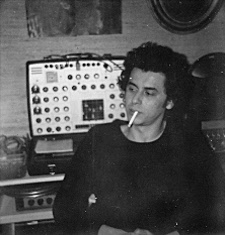
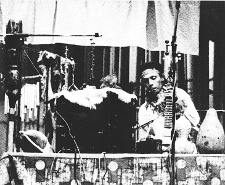
In the late 70's and early 80's I worked for import music companies now long gone in Portland and LA. At that time I opened the door to many new countries and bands musically via Eurock and my main job as buyer of new music from around the world. On such country was Spain, which during that time produced an amazing bunch of bands and music styles and sounds. The best known entity Internationally was Neuronium based in Barcelona, which also produced the UMYU label headed up by the band Macromassa and former guitarist of Neuronium Albert Gimenez. Madrid was the base of the largest progressive music label Movie Play that produced a plethora of progressive bands - Triana, Granada, Pau Riba, Gualberto, Gotic + many others. We sold goodly numbers of these albums in the US, even though they were virtual non-entities in the mainstream market in Spain for the most part. One of my most interesting discovers was the label EL Cometa de Madrid which featured some amazing artists who explored electronics, ethnic instruments and exotic jazz rock creating an amazing European musical fusion. I imported that label while it lasted, and one of it's most popular and amazing releases was an album called NEPTUNO, by a musician named Luis Paniagua. Over the years I searched out and tried to obtain and promote his latest albums here. By happenstance I recently finally got in touch with him personally and discovered he was still going strong with his large catalog of releases on CD now on his own label. An interview was arranged for, and two of his masterworks are now made available for all to hear and marvel at the wonderful music he makes. The following interview was just completed, and I think it offers a fascinating insight into the man, his history and music. Read on, then give a listen! A. Q: What was your musical background when you were young? I believe other members of your family are also musicians. Are you self taught, or did you have some formal musical education? I was born in a very good family atmosphere for playing music. My father is a medical doctor, but he loves classical music very much. My older brother Gregorio Paniagua created in 1965 a medieval or early music group called �Atrium Musicae�. I played concerts with him from 1972 to 1982 in Europe and America and was on many of the 14 albums he recorded. In a way I am self taught, I did very short formal studies, but my older brother was one of my teachers. Another one in classical Indian music was my guru T. N. Nagar, I went to India to study sitar with him in 1980. Q: I first discovered your music back in the late 1970�s when I heard an excellent album titled ORIENTE - OCCIDENTE, by a band you were in named Babia which also featured your brother Eduardo and Luis Delgado. Was that your first recording? That was my first recording as a composer. Q: After Babia I didn�t hear any other music for some years until I discovered the El Cometa de Madrid label who released a lot of amazing records. I believe it was created by another very interesting Spanish musician named Luis Delgado. EL Cometa� released a solo album NEPTUNO. That was 5 years approximately after Babia. What did you do during that interim musically? After ORIENTE-OCCIDENTE from BABIA and before NEPTUNO I made another album called DE M�GICO ACUERDO (Of Magic Agreement). It was music composed by me for a septet, violin, viola, violoncello, and double bass. Another of my brothers Eduardo played psalterio, flute, kalimba, and there was a percussionist playing marimba, vibes, tympanis and me, sitar, pipa, tabla, flower pots� Q: I imagine at that time your music was more experimental than most in the commercial or traditional market. During those early years was it a very isolated situation, or was there a specialized scene for that type of music in Spain? It was like a desert, and like inventing a new way of playing music. Now I can look back and laugh at how crazy it was, but I was very young with a lot of energy, strength and a lot of love for my music. I believe in this kind of music and also I love the sound of the many instruments from all around the world. Q: Your music seems based on ethnic and traditional music of the East perhaps. Did you travel extensively in other areas, or spend time in one particular country or another, absorbing influences from those different cultures? The only place where I spent some time was India playing sitar morning, afternoon and most all nights during six months. It was a great time. The rest of the places I traveled I was playing concerts with �Atrium Musicae�, then later by myself. But these were short trips only to perform. Since I was 12 years old however I was learning, reading, and looking at pictures in books of instruments from around the world. Also I had a great interest in discovering music from all the five continents. Q: Have you found continuing interest over the years from major labels, or is it basically the smaller independent labels that are willing to release your music? In the beginning there were some medium sized labels. Later it was smaller companies because I was not willing to consent to the conditions of the contracts major labels offered me. Now I have my own label named SILENTIUM (Silence in Latin). Perhaps it is because we are in Spain, for example, but the records I record with �Atrium Musicae� for a Spanish label are not distributed anymore in this market. Today the ones we released in France you can buy it in New York, Paris, London, and Tokyo� Q: Is it easier now to promote experimental music in Spain than before, with perhaps better channels for exposure? Or are there fewer possibilities there today in terms of playing concerts and selling the more experimental styles of music - ethnic World music, electronic, etc.? Now it is better than before, there are some good festivals in Spain, and many groups from all over the world come to play at them. Q: You�re most recent albums BIENVENIDA & FRAGMENTOS were released in 2002 and 2003. Does they have good distribution in Spain? Now all my albums (13 in total) are on my own label SILENTIUM, and are distributed by the Spanish company KARONTE.
The albums are:
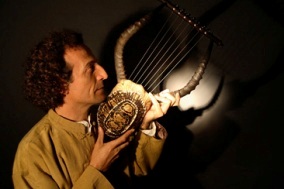
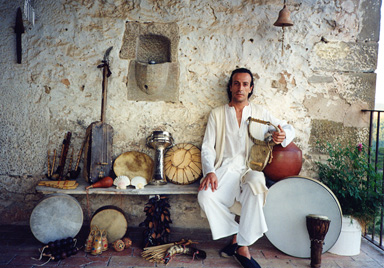
Q: Are you presently working on new music for a new album, or have any concerts planned for 2007? I am playing solo concerts, the instruments utilized are the voice, the Mediterranean lyre constructed as described in the Greek mythology, with a ground turtle�s shell, two horns and seven intestine strings, the Lira of Hermes, Orpheus and Apollo, the Tibetan Bowl, the percussions of Africa and modern electronics. I am also doing concerts (without words) for babies with an actor and a dancer. On the July 21st of 2007 we are going to Miami, Florida to perform.
Finally I am preparing a new program for quintet. The musicians of the ensemble
are: The premiere of this project, �Mediter R� Neo� featuring Nuevas M�sicas Ancestrales (New Ancestral Music) will be in Lorca, Spain on July 3, 2007. The musical work is entitled �El Cielo en la Tierra� (The Sky in the Earth). We are going to record the rehearsals in my home studio, and also record the concert. After that we will go into a recording studio to mix the music for a new CD.
|