 reviews features podcasts email bio
|
The Story so far... Label & Artist Submissions Accepted for Review...
|
Manuel Goettsching 2006 Interview
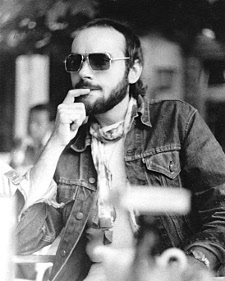
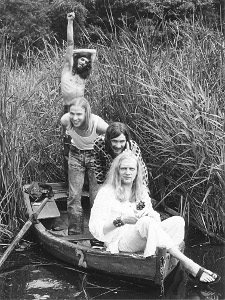
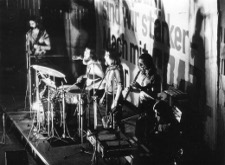
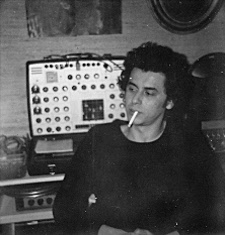
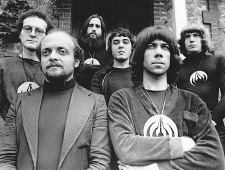
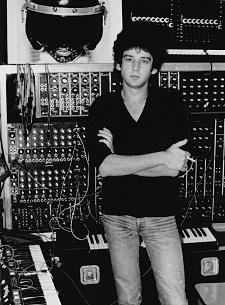
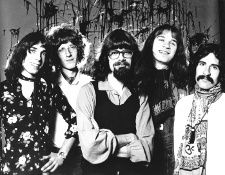
In the beginnings of the new German rock era in the late 1960s there were several artists and bands that broke through the original barriers of musical schlager tradition in their homeland. None were more pioneering than Ash Ra Tempel. Their first self-titled album is perhaps the ultimate recording by a power trio. Manuel Goettsching was the guiding light of ART. Hew went on to create a body of work in subsequent years that embodies the spirit of musical exploration and invention, on guitar and electronically. This interview evolved out of questions submitted, then discussed over dinner, translated, and edited. It is reflective, as well as visionary. As Manuel tells his story and expounds on his ideas, it becomes very clear just why the music he makes was/ is some of the most unique and innovative, whether it be in the past, present or future. -A. Patterson
Q: As one of the original German space rock musicians who founded Ash Ra Temple back when the music was very influenced by experimentation and LSD, you have not remained stuck in the past. How would you describe your way of maintaining creative inspiration and the energy to realize your musical ideas now since the scene has changed so completely? MG:
Q: So you were not on LSD during the recordings? MG: Q: And one can attain that state without the use of drugs? MG:
Q: And that was also Learys opinion? MG: LSD was known about generally before then, and its not Tim who invented it. It was the Swiss chemist Albert Hofmann who turned 100 years old in January, who discovered it in 1943. Many psychologists had worked with LSD before Tim did research with it, without taking the drug themselves. And Tim was someone who tried it out himself, so he knew more about what he was doing than others. Seven Up was not my first album. I was inspired earlier to play music, through the music I heard and then played by myself, from the Blues, Improvisation, Experimental Music to Minimal Music. I have always been interested in popular music, as well as experimenting musically. That interest inspired me to find a mixture, or lets say the fusion between popular and experimental music.
Q: Which musician/ groups inspired you? MG:
Q: Is Eric Clapton a great guitarist in your opinion? MG:
Q: What about Jeff Beck? MG: I also remember Peter Green from the beginnings of Fleetwood Mac, and other English blues musicians. They all were students of Alexis Korner and John Mayall. Many famous guitarists went to school & studied with these two important personalities. As a guitarist, of course, this kind of music influenced me.
Q: Can you talk a bit about the Concert For Murnau. What was the creative process like as you wrote the music for that film? MG: Willy Sommerfeld is not only the last silent movie pianist from the silent movie era, He is a phenomenon! He only improvises, without scores, without a concept, sometimes he does not even know what kind of movie will be shown. He just develops a soundtrack off-the-cuff live on piano. This in fact is similar to the first concerts of Ash Ra Tempel, where the three of us went on stage and did not know what we were going to play. We did not even know which key to play in so just started out of the blue, and over two hours of playing something developed out of it. We were just playing what we felt, and it translated into some sort of music! Willy Sommerfeld did that on piano in a classical form, so I thought I could do that with electronic music. I wanted to try, using todays technological possibilities, to improvise a movie score electronically. That turned out to be very difficult as you have to prepare all the electronic equipment and programming, then react to situations in the movie. Using the improvisational method of Willys was the basis of my conception. I selected Schloss Vogelod (Haunted Castle) because it was highly diverse. I started with voices and rhythmic elements that are often used in electronic music, i/e., drum machines and voice sampling. Then I had the idea to do something with an orchestra, because of the venue in which it would be performed, the State Theatre of Brunswick which usually provides an orchestra with musicians. To integrate classical musicians into an experimental format is really problematic. You cannot inspire orchestra musicians to improvise; you have to practice with them (that is why Steve Reich established his own orchestra). They want to see written scores for orchestra and singers, there is no room for making things up as you go along. Another difficulty was having to change the concept due to the movie itself, which came in a completely different version than the one I had seen before. The demo tape was short, fast and made from a black and white film. I then got a restored colour version, which was 20 minutes longer. I played the first version with 24 fps (frames per second) which produced a different level of tension dramatically. After the restoration, the movie created a different sort of visualization, so I had to lay out the music in a different way. Then I decided to use a chamber ensemble provided by the theatre, with two violins, two horns, a cello, plus electronics. Schloss Vogelod (Haunted Castle) is a sort of psycho-thriller, which takes place at a hunting party where the attendants try to expose a murder of the past.
Q: Are you satisfied with what came out, or would you do it different way now? MG:
Q: Would you prefer the Russian Berliner street musicians? MG:
Q: Was Inventions for Electric Guitar a kind of minimalist precursor to E2-E4? MG: E2-E4 was improvised completely off-the-cuff, while Inventions was recorded during three months of hard work. The structure of Inventions was worked out as a predetermined sequence. Inventions is from 1974, and was based on my earlier experiments on guitar. You can hear some elements on side two of the first Ash Ra Tempel LPs from 1971, but that was completely improvised, not in a composed form. E2-E4 came out of my later improvisations with electronic instruments, the guitar playing a very important and solo function. Inventions builds upon the musical beginnings I made on guitar that were basically improvised and played live at concerts. The basic approaches of E2-E4 are already in evidence on Ash Ra Temple. By Inventions For Electric Guitar, I worked out a real structure, and there is a certain sequence.
Q: Inventions sounds electronic. MG:
Q: Did you use any electronics on Inventions? MG:
Q: That was a studio creation then? MG:
Q: So it is being played backwards? MG: After Inventions I had enough of playing guitar for a while and I wanted to do some other interesting things and started playing organ. That brought me to New Age of Earth. For it, I composed things in a different way, on a keyboard instead of a guitar because of the playing technique which is different. You can combine tones in a different way on guitar. You can create other ideas musically due to the intervals and harmonies you do not get from a guitar. That sort of composing experimentation led me to New Age of Earth. New Age of Earth is not an electronic record. It was music that came about through exploring the possibilities of the keys on a keyboard or piano. It was however sold as electronic music because it was produced electronically.
Q: Does it have anything to do with New Age Music? MG: In addition, when you hear NEW AGE today, it sounds like, MUSIC, but my record was meant as symbolizing a New Age of Earth, not more and not less. Moreover, at that time, New Age Music did not really exist.
Q: New Age of Earth was more composed than improvised? MG: After that, I released Dream & Desire which I recorded for radio broadcasting, mixed with experiments from the studio. That is where No One Laughs Backwards came from in 1978.
Q: Why was it called No One Laughs Backwards? MG:
Q: E2-E4 came in one go. I cannot believe that. I think you really deliberated how to do it before you did it? MG: For example, I played in the studio yesterday, only I did not record it. That was not so important, because I am not so familiar with that new technique yet. I will have to rehearse for few years until it sounds as perfect as E2-E4. In 1981 when E2-E4 occurred, I had already worked five years long with the instruments that I used, at home, in the studio, and at the fashion shows.
Q: Which instruments do you mean? MG:
Q: And yesterday? MG:
Q: Is that what Klaus Schulze exclusively uses? MG:
Q: That is the way Schulze plays it. Do you want to learn it that way? MG:
Q: But there are musicians that already use it, or not? MG:
Q: And how many years will you need for that? MG:
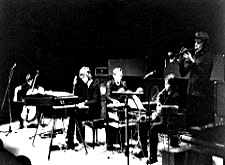
Q: For the live performance with the Zeitkratzer Ensemble, did you have to write out the other parts for the various instruments, and then do many rehearsals? Alternatively, did the music flow in an organic way, loosely, yet structured as an evolution of the original theme during performance? MG: Franz Hautzinger selected a few short patterns from the piece, and presented them as music scores. The musicians familiarized themselves with it, and then played their own variations. They improvise. They were given short scores. The music is not composed note by note. It is only a basic structure that they augment. Moreover, when they finish the original ideas, they start again with the basic structures. It is like a framework they can develop themselves by building upon it. The interesting thing is that the ensemble consists of very good musicians that have much fun improvising and playing music. On the other hand, there is a basic harmony that not everyone plays at the same time; they listen to what the others play. Then develop themselves a form of interplay, without a conductor that says, now you, and now you. They can do that without any instructions. When does the violin player start, when does he stop, they just hear that. Then sometimes, someone stops playing, and lets someone else play, and it works. A good ensemble can do that.
Q: The mix surprised the members of the ensemble? MG:
Q: With the Zeitkratzer concert, and the release of three new productions at the end of 2005, it seems you have come alive creatively again. Do you have any plans for 2006-07 formulated yet, in terms of other concerts and releases?
MG: I will perform this program again in Breslau together with Haunted Castle in an electronic version. Then in August, perhaps a second concert where I will perform E2-E4 live for the very first time. We will see. There are also invitations from China and the U.S.A. And together with the Zeitkratzer I would like to perform from Phoenix to Laguna, then a concert in St. Petersburg with Edward Artemiev, Inventions, live on guitar with three popular friends in the USA, and maybe a composition for the Kronos Quartet. There is a lot to be done, lets go for it!
Q: Will there be any new releases? MG: (Ed. Note: a famous New York DJ among the new generation of electronic musicians. He has his own label, shop, and has also recorded with Herbie Hancock. There is also coming in the near future a DVD release of the Zeitkratzer-concert). I was also thinking about a remix of New Age of Earth. However, because of the work on a new version of Sunrain, I am not inclined now simply to do a remix. There are so many different variations, which were not possible at that time. I am thinking about a new version of Sunrain, but it would not have anything to do with the rest of the album. It would be a re-creation with many different variations and possibilities.
Q: Would it still be called Sunrain? MG:
Q: Will it be a similar composition to E2-E4? MG:
Q: You do not think that E2-E4 is your best work? MG: In addition, E2-E4 was just a good moment. There is not much substance to it. There are only two chords and bum-ching. It was correct what Franz wrote, there are short things and you make something out of it. You can write it down note by note, but for what?
Q: Are there other compositions of yours more musically full of life? MG:
Q: Is there only one on New Age, Sunrain? MG:
Q: In which direction does your music now evolve? You cannot call it Kraut, Cosmic or Jazz anymore. Zeitkratzer or Kronos Quartet are interested in it. Are you just evolving, or diverging from your roots? MG:
Q: When I listen to Haunted Castle, it sounds very classical. However, it was intended for a specific movie with certain flair and in a certain mood. MG:
Q: What about acoustic instruments? MG:
Q: Does that mean you will not use them anymore? MG: I combined those sorts of technique with the Zeitkratzer Ensemble. It was funny to interpret that backwards, but that kind of music really does not translate very well for orchestra. It is more natural when working with electronic instruments. I want to create new ideas and experiments by fusing different styles. I call that contemporary music because you play it today, and it offers creative possibilities in terms of new directions. In my opinion, that is modern music, or the music of today.
[Special Thanks to Ilona Ziok & Myriam Abeillon who helped greatly in making this Interview happen.]
|