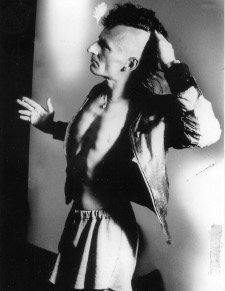
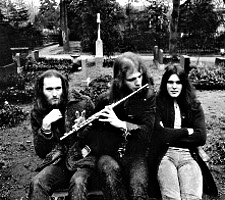
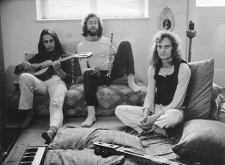
|
Gerhard Augustin Interview
The Godfather of Deutsch Rock
Throughout
the history of music, as well as other forms of art and
entertainment there have always been celebrities. Behind the scenes
are the dealmakers who sometimes get attention as well (for better,
and for worse). Occasionally there are those who serve as a catalyst
for something bigger. Be it a cultural shift, change in musical
style, or discovery of groundbreaking artists or bands, it is
uncommon for them to get much attention or recognition. Often it is
those with visionary ideas that make things happen, and later get
overlooked when the story of how it all began is told.
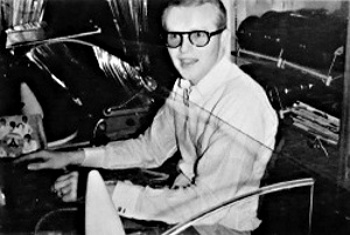
One such
dedicated promoter of music is Gerhard Augustin. At a time in
Germany when English was largely an alien language, and “schlager”
(German folk/pop music) was the norm, Gerhard grooved to a different
beat as a DJ in Bremen. As co-founder of the famous TV show “The
Beat Club”, and A&R man who engineered the signing of Amon Duul 2,
Popol Vuh and Can to Liberty/United Artist Records in 1969-‘70, he
helped lay the establish for a cultural shift and musical revolution
in Germany. Gerhard possessed an open mind and the business skills
to act as a bridge between the underground and establishment. In
effect, he was the godfather of Krautrock, which still resonates
musically in the world of pop music influencing countless
contemporary bands.
His story
is fascinating and it is past time that it was told. I think you
will find the following interview offers a fascinating glimpse into
the past, giving long overdue credit to one of Europe’s unsung
musical pioneers. In many ways, Gerhard is "the Godfather of Deutsch
Rock". As an A&R man for Liberty/ United Artists Records he got
signed and produced the first albums of perhaps the three ultimate
German bands of that time - Can, Amon Duul 2 & Popol Vuh.
Q: Tell
me, in the beginning how did you get German TV to allow you to
produce "The Beat Club” music program? What year was the first
program broadcast?
In 1963, I
became the first German DJ in Bremen. There was a restaurant called
The Gypsy Cellar that sometimes had live music in their basement. I
knew the owners, I recommended to them that they turn it into a
discothèque for dancing and they agreed. So we put in two turntables
and named it the Twen Club. It became one of the first youth clubs
at that time.
I had just
come back to Germany after Kennedy was shot as I had been from
living a while in the USA. I had seen Shindig there and Top of the
Pops in England so around 1966 I started trying to promote doing a
German version of those programs that turned into The Beat Club.
Radio Bremen produced the program, which was directed by Michael
Leckebusch and hosted by Uschi Nerke and myself. The first show
aired Sept. 23, 1966 on a Saturday afternoon at 4 PM.
Immediately reactions came in, letters, calls, etc. People from the
older generation (old Nazi’s) hated it, young kids loved it and said
things like “keep it going” and so on. It caused a real reaction
between the generations.
Q: It
became a sensation on the pop scene and helped start some of the
most famous pop groups on their road to fame and fortune. Who was
your favorite English pop group that appeared on the show?
My
favorite band in those days was The Who. We had become friends
earlier when I had worked in England and our friendship continues
today. I had met their manager, Kit Lambert, who gave me an acetate
copy of their first single “Can’t Explain” b/w “Bald Headed Woman”.
They were trying to get a label for it in the early days. I also
liked very much The Kinks and the Stones who I met while in London
around 1962. Everyone hung out at a pub near the Marquee Club back
then.
Q: I have
seen tapes of many of the English stars that appeared on the
program. However, at one point you started to feature also the newly
emerging bands from the German space rock scene. How in the world
did you get mainstream German TV station executives to allow that?
The whole
Beat Club thing was a result of the relationship I had with Mike
Leckebusch over the years. When we created the show together, we
became great friends. However, slowly over time, he wanted to take
more credit for the show and later some English managers recommended
he should use a British DJ instead of me so the show might be of
more interest to the English market. Larry Page and Robert Wace were
the main ones behind this, they were part of a sort of 1960’s UK
music mafia of old business types who wanted to control pop music in
Britain. Eventually they gave Mike some money to buy a big house, a
Jaguar and all those things, so I got phased out and he went on to
gain fame and fortune himself. It’s an old story. He became very
corrupt and there was lots of payola going on with the show back
then.
The
English pop stars were often on the show because their songs were in
the charts in Germany. Soon the record companies started helping
with this as they realized that even though TV production was very
primitive in those days – black and white, etc., they saw it could
influence sales greatly.
As for
getting the more experimental bands on the show, I think Mike always
had a bad conscience about pushing me out of The Beat Club. He knew
I was the originator of the idea for the show and developed it after
the other shows I’d seen on my trips overseas. Therefore, as a
result of this, every time I came up with a new German progressive
or experimental act I would bring it to him for exposure. I got
groups like Amon Duul 2 and Popol Vuh on the show, but it took a lot
of convincing. In the end because of his guilt, he would put them on
as sort of a favor to help me out.
Q: Was it
just after doing The Beat Club that you became the head of A&R at
Liberty/UA Records and were involved in production of the first Amon
Duul 2 and Popol Vuh records (around 1969-1970)?
Well, not
quite… When I left The Beat Club, in 1968-1969 I went to America and
lived in San Francisco. There I discovered bands like Santana and
CCR for the German market. I also met Bill Graham and we became good
friends. He introduced me to the Grateful Dead, Quicksilver, Sly &
the Family Stone, Ike and Tina Turner, Tom Donahue (the original FM
DJ playing underground music) and Ralph Gleason who was one of the
first journalists to write about the new underground music in the
Bay area. I was very fortunate to be in the right place, at the
right time for all that was happening in SF then.
While I
lived in SF, I worked at KQED TV and was awarded a scholarship and
got a diploma in Mass Communications at Stanford University. After
graduation, I got a job in Los Angeles with United Artist Records
and learned all about how the company worked. They then sent me to
Germany to work for the company there. When I got over there they
wanted to sign some domestic German bands to their roster. Sigi
Loch, head of the famous Star Club record label, started a German
flagship label for UA/Liberty Records, to aim both at the home
market and abroad. I got them to sign AD 2, Popol Vuh and Can. The
record company knew little about that type of music of course, so it
was sometimes a rather strange situation as you might imagine.
Q: While
doing The Beat Club and promoting AD 2 and Popol Vuh did you, do the
actual music/video production or work have help from others like
Olaf Kubler, etc?
I was only
involved in financing and management of the video production. We did
one for “All the Years Round” by AD 2. That was the first music
video production in Germany. We paid a director and video company to
do the filming. It was played, but there were very few media outlets
for that type of thing in those days. We did several other videos as
well, but that was the early days of TV and the experimental bands
were not really attractive to the mainstream media.
Q: Amon
Duul 2, I believe actually started as a political collective then
the main members broke off to form a specific music group.
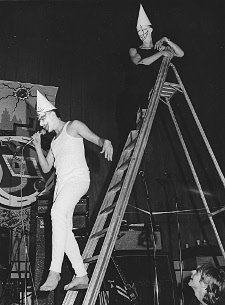
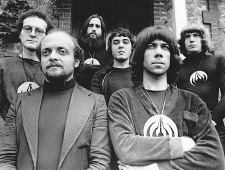
Amon Duul
did begin as a political commune in Berlin. It was formed by the
coming together of politicos from Berlin like Rainer Langhans and
Uschi Obermeier (who became a famous model later), with musicians
from Munich – Chris Karrer, Peter and Ulrich Leopold and Falk
Rogner. Renate was not involved as she was living in England then
working as an au pair. After a while there was a split into AD 1
(the political people), who recorded one big party/session before
they descended into chaos. That resulted in several records having
nothing to do with the real AD 2. Amon Duul 2 (the musical side)
moved back to Munich where the group was joined by John Weinzierl
and Dave Anderson (who came over from England). The first album of
AD 2 – PHALLUS DEI – was recorded in two days at Trixie Studios in
Munich. It was the first space rock album and caused a sensation on
the young scene.
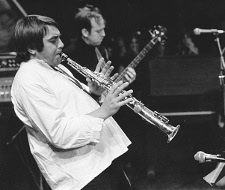
Lothar
Meid in the beginning was playing with Embryo, before he joined AD 2
later. He also played with Olaf Kubler (who was a jazz saxophonist).
They played jazz and soul music on Sunday afternoons in a couple
clubs around 1968-’69. Olaf also produced and published the AD 2,
and many other albums. He was a real Mafiosi type involved in the
music business.
Q: What
was the scene like back then? Did those records sell large numbers –
for example, do you remember how many copies YETI and TANZ DER
LEMMINGE & AFFENSTUNDE sold?
For the
new underground groups without a hit single it was very hard. Some
of the old Nazis were still in control of the media, so they would
never give exposure to the new more experimental rock music. Society
in Germany was just about to start changing, so a few dared to
promote this new music and ideas, but rock and roll was new to
Germany. Here that sort of thing basically started 10 years later
than in the USA. Most people still listened to Frank Sinatra, Sammy
Davis Jr., Johnny Mathias and Peggy Lee. For the most part, English
was not spoken much at all. Beat Music started to change this around
1965. Later many German bands started to copy the English bands,
covering their songs, and playing on The Beat Club as the most
famous English bands became too big and expensive. In addition,
payola started playing a large part in the music scene and it all
started to change in many ways.
Q: During
the heyday of the "space rock" scene in Germany was that type of
music a significant market and did the albums produced by those
bands sell a great deal? Alternatively, perhaps has the myth always
been bigger than the reality?
Sales of
these albums were actually very low. AD 2 was the first to start
selling with PHALLUS DEI. Then Can had their song “Spoon” on a
German TV crime show called “The Knife”. That caused it to hit the
charts and ultimately it went silver, which in Germany meant selling
250,000 copies. Later their album, EGE BAMYASI, with that song on it
started selling as well. Can made good money actually.
Over time
AD 2 sold maybe 60,000 copies of PHALLUS DEI, their other albums
sold between 20, 000 – 50,000 worldwide sales over the years. They
still sell today reissued on CD. AD 2 never had a hit single,
although we tried with “Archangels Thunderbird”, and a couple
others, so their sales were smaller.
Q: Over
the last few years, it seems there has been renewed interest in some
of the original German bands. AD 2 reformed and did concerts in
Japan and England. Is the band still together now? Who are the
current members?
There was
actually some confusion surrounding the name and music of Amon Duul
2 as some albums came out in England that were not really connected
to the band. Therefore, there was a court case in Germany where the
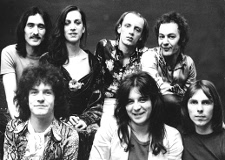
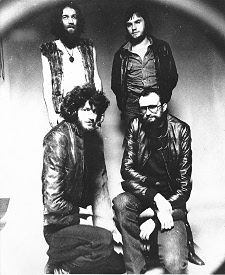
members of AD 2 were actually certified. They are – Renate
Knaup-Krötenschwanz, Chris Karrer, Peter Leopold, Lothar Meid, Falk
Rogner and John Weinzierl. A couple years back some of them reformed
and we did some recording and live shows in Japan and the UK.
However, for something more permanent the chemical formula was not
good…
Q: What
about Florian Fricke, do you still have any contact or work with
him?
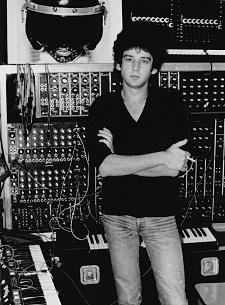
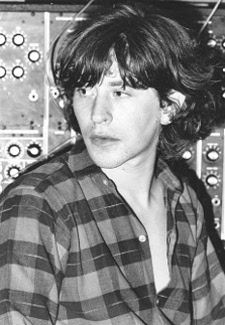
Florian
Fricke was also from Munich. On the first Popol Vuh album,
AFFENSTUNDE, he used the first Moog synthesizer in Germany. Along
with Eberhard Schoener, they pioneered the use of synthesizer in
Germany. Later Florian sold his Moog to Klaus Schulze who became one
of the leading electronic musicians in Germany even up to today.
Florian
had perhaps more success than AD 2 because I arranged to have his
music used in five of Werner Herzog’s films that helped him gain
more exposure internationally and better sales. In fact, one of his
songs, originally in AGUIRRE, was also used in a successful American
film that won a prize at the Cannes Film Festival; it was called
BEFORE NIGHT FALLS. I was producer of most of the Popol Vuh albums,
and am also the godfather of his son Johannes. Sadly, Florian passed
away a few years ago…
Q: What is
your main area of work these days? You have a company called
Gammarock Productions. Do you still do video production and perhaps
consult for record labels?
Gammarock
is a company I formed in 1976, in LA, with Patrick Gammon (who died
in 1996). Now I handle all the music publishing, as well as the
video and music production for the Gammarock material, which
includes Popol Vuh and many more mainstream artists. We place
artists with labels and get the music into films, etc.
I also now
do a public radio show again here in Bremen again. I have always
loved being a DJ and still do today.
Q: After
all these years what is the most memorable thing that music has
brought into your life? A special concert, album, or travel to some
faraway place?
Music has
always been the most important thing for me - more important than
sex, love or relationships. Music is essential to my life whether I
sing it, play it, hear it, work with it, or make money with it. In
my opinion, as a publisher, producer, musician, artist and music
lover, in the movies, music is more important than the actual
pictures. It makes the film come alive. I am what you call a music
freak. I have made my living all these long years with music, being
a DJ, doing shows, and writing eight books about different artists
along with anthologies on pop, rock and beat music.
Some of
the most memorable events in my life are associated with music. I
traveled with Jimi Hendrix that last 3 weeks of his life. He was a
very beautiful person and musical genius. Also with the Rolling
Stones, I had many breakfasts, trips, concerts, shows… I met John
Lennon at the house of Jann Wenner (of Rolling Stone) in NYC, around
the time of the recording and release of IMAGINE… I toured around
the world with Ike and Tina Turner - Australia, Japan, Africa, at
the height of their career and during their times of trouble and
breakup.
Q: Could
you imagine a life with no music in it?
Truly, I
do not even want to think about a life without music. I have met so
many musicians, actors and great people; music has been a most
wonderful life for me.
-Archie
Patterson |